Many founders sign Non-Disclosure Agreements (NDAs) without second thought, treating them as mere formalities. That’s a costly mistake. In a real court case, a startup contractor posted a blurred mockup of a project UI in their portfolio. The client noticed, claimed an NDA breach, and successfully sued for a fixed $20,000 penalty.
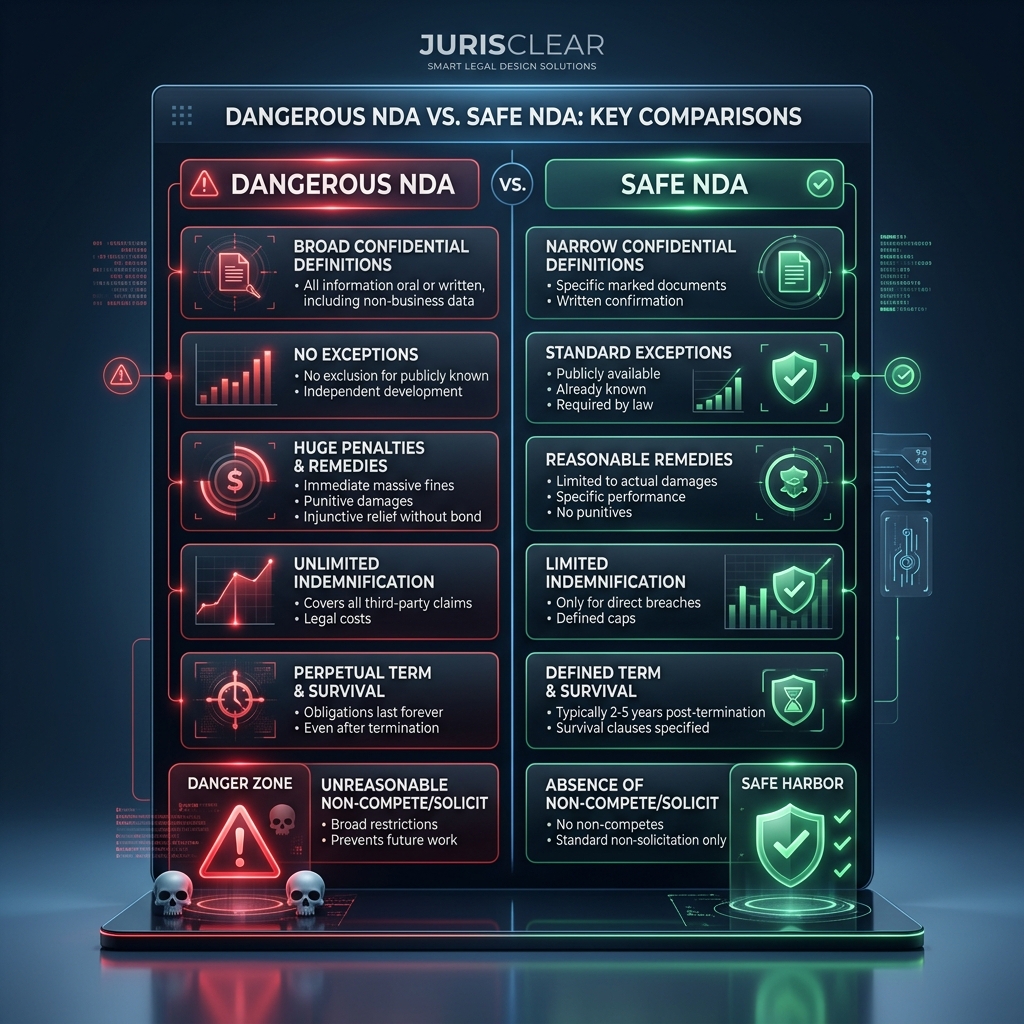
Why did the court rule against the startup?
- Broad Definitions: The NDA defined confidential info too broadly (“any info shared during the project”).
- Fixed Penalties: The penalty was fixed and triggered by the simple act of disclosure, meaning the client didn’t have to prove actual financial damages.
Showing a workflow screenshot on social media, mentioning a client's name at a conference, or sending a mockup to a subcontractor without prior written consent can trigger massive lawsuits.
How to protect yourself before signing:
Scan Your NDAs
Don't sign blindly. Ensure your NDA has proper limitations and damage caps.
- Limit Confidentiality: Instead of "any info," ensure the contract states: “...confidential information shall be limited to documents explicitly marked as 'Confidential' or transferred via secure logs.”
- Optimize Penalties: Instead of fixed penalties, negotiate to cap liability: “...recovery shall be limited to proven direct damages, capped at 100% of the contract value.”
Trust is good, but contracts are what protect your business. Don't sign blindly. Use JurisClear AI to instantly flag hidden traps in your NDAs before they cost you your business.