Many startups and enterprises hire freelancers or dev agencies using standard work-for-hire agreements. One of the most common and dangerous clauses in these templates states: “Intellectual property rights to the software, designs, and materials transfer to the Client upon full and final payment.”
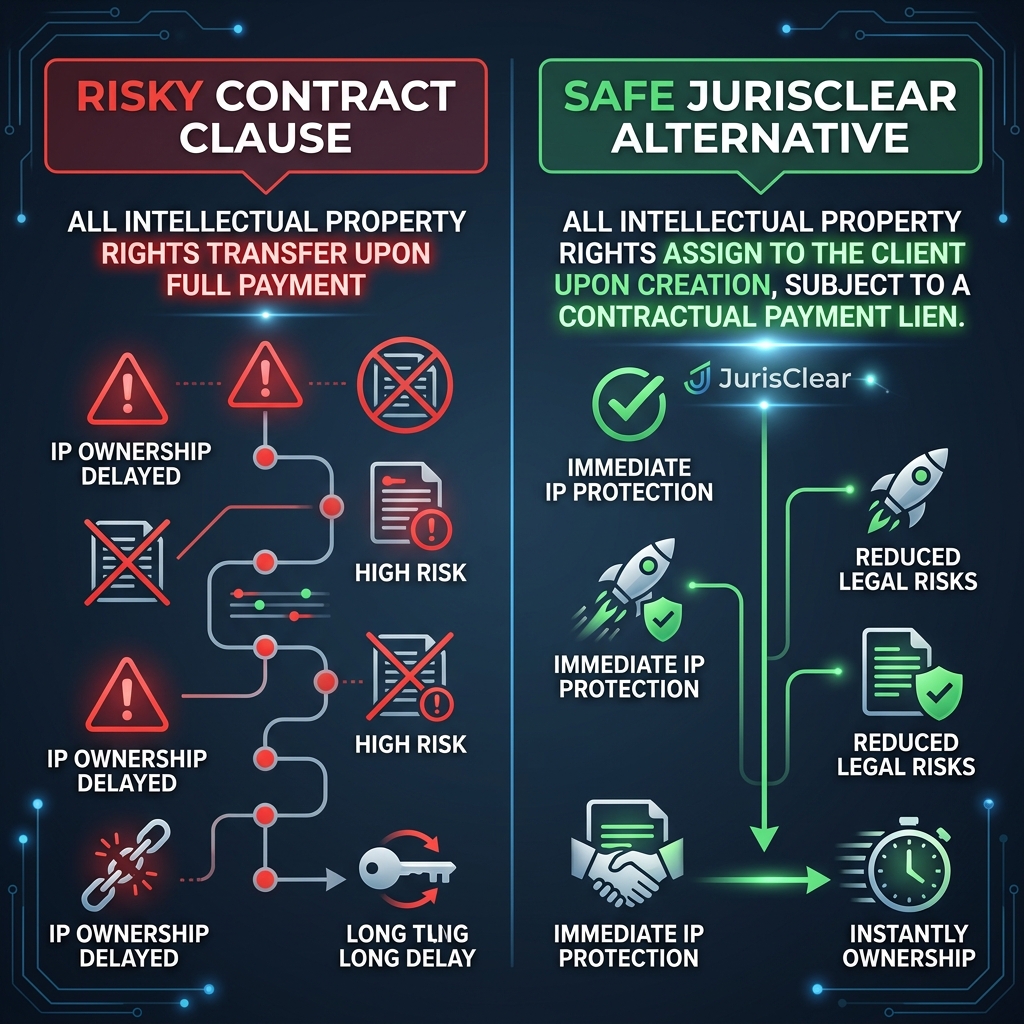
It sounds logical: you pay, you own. But this creates a massive loophole.
A real-life court case
A company hired a contractor to develop a SaaS platform. Near completion, minor bug disputes arose, and the client held back a 5% final payment until the issues were resolved. Meanwhile, the platform was launched. The developer sued, demanding an injunction on the software's use and damages for copyright infringement.
The result: The court ruled in favor of the developer. Because payment was not completed in full, the IP rights never transferred. The client was legally forced to settle on the developer’s terms, risking their entire business.
How to protect your code and investment
Secure Your Intellectual Property
Ensure you actually own the code you pay for. Upload your developer agreement for an instant AI audit.
Don't launch your product on a legal foundation of sand. Ensure your contract includes balanced alternative clauses:
“All intellectual property rights assign to the Client upon creation, and the Contractor's payment security is maintained via late-payment interest or temporary service suspension.”
Protect your intellectual property before you sign. Use JurisClear AI to instantly flag "transfer upon payment" clauses as a Critical Risk during automated contract audits and negotiate safely.